Palace of the Grand Master

The Palace of the Grand Master stands at the top of the Street of the Knights, at the highest point of Rhodes Old Town. It opens daily from 08:00 to 20:00 between 1 April and 31 October, and from 08:30 to 15:30 except Tuesdays in winter. Entry costs €20, for a timed slot. Its floor mosaics came mostly from Kos.

Updated

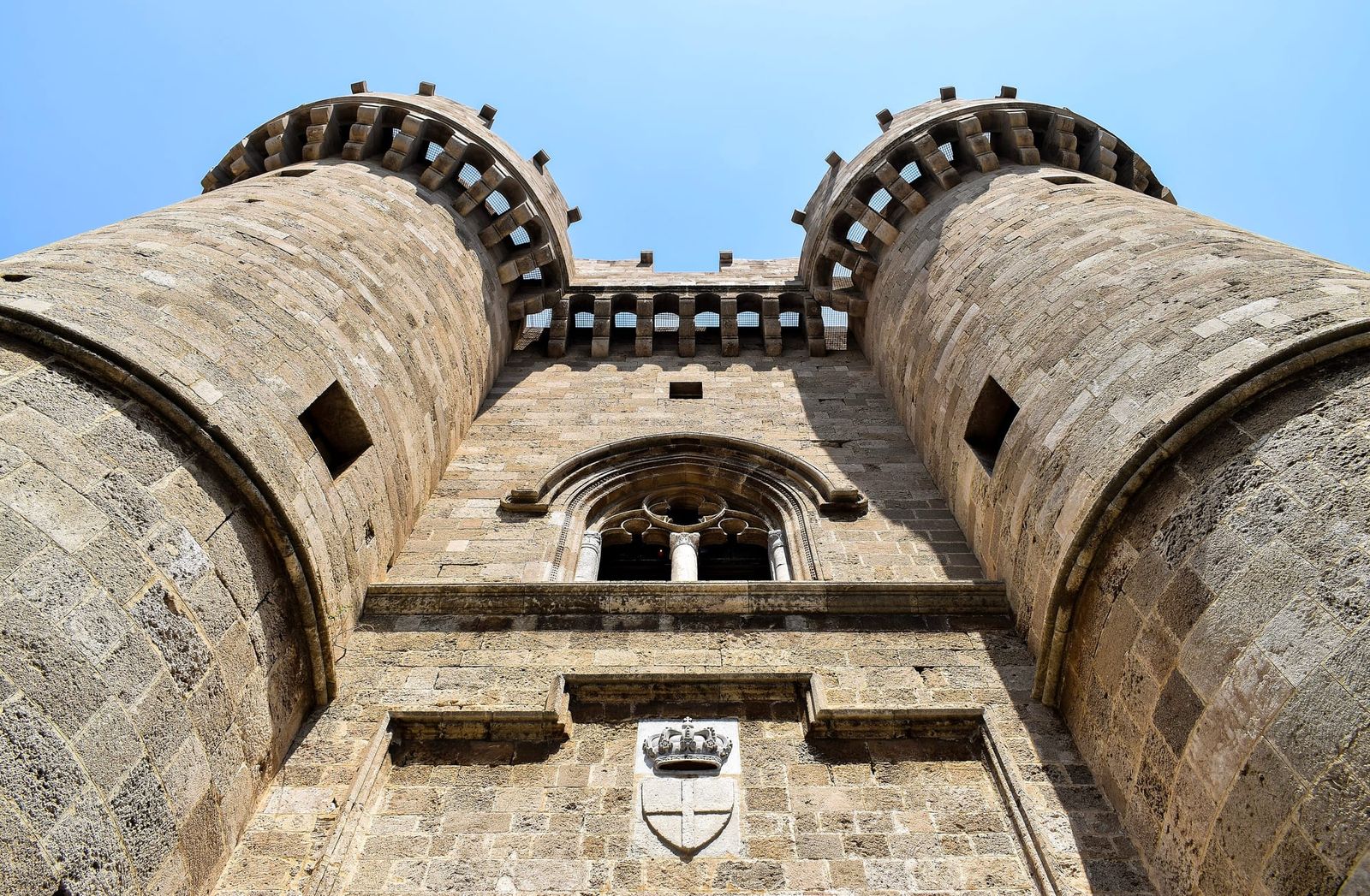
The entrance of the Palace of the Grand Master: two round towers with battlements over the gate, seen from below

Key facts

Opening hours
08:00 to 20:00Every day, 1 April to 31 October
Opening hours in winter
08:30 to 15:301 November to 31 March
Closed
Tuesdays in winterAnd on some public holidays
Last admission
20 minutes before closing
Entry
€20Reduced €10; sold for a timed entry
Free entry
First and third SundayOf each month from November to March
On foot from Hippocrates Square
9 min on foot600 m
Rebuilt
1937–1940After the explosion of 1856

Where the palace is

The Palace of the Grand Master, also called the Kastello, stands in the north-west of the old town, at its highest point. It was built into the walls as a stronghold, the last refuge of the population if the town fell. The main entrance is in the south facade, between two towers, at the top of the Street of the Knights.

Its address is Ippoton Street, the Greek name of that street. Hippocrates Square is 600 m away, 9 min on foot, and the map of the old town shows the way up from Hippocrates Square.

Opening hours and ticket

The palace opens every day in summer and every day except Tuesday in winter. A ticket costs €20 and is sold for a timed entry.

Opening hours of the Palace of the Grand Master
SeasonDaysHours
Summer, 1 April to 31 OctoberEvery day08:00 to 20:00
Winter, 1 November to 31 MarchEvery day except Tuesday08:30 to 15:30

Last admission is 20 minutes before closing time. The palace is closed on 1 January, 25 March, 1 May, 25 December, 26 December and Easter Sunday.

Tickets for the Palace of the Grand Master
TicketPrice
Full€20
Reduced€10
Visitors from EU countries up to the age of 25, visitors from other countries up to the age of 18Free

The ticket is for the palace alone: the Archaeological Museum has a ticket of its own.

Free days

Entry is free for everyone on the first and third Sunday of each month from 1 November to 31 March. It is also free on 6 March, 18 April, 18 May, the last weekend of September and 28 October.

On site

The palace has a café, a shop, toilets and wifi. There is a ramp, a lift and an accessible toilet, and signs are in Braille as well.

What is inside the palace

The rooms of the upper floor, with their floor mosaics, are open in both seasons. The two exhibitions on the ground floor are closed in winter and open only in part in summer.

The palace is a roughly square building of 80 × 75 m, set round a courtyard of about 50 × 40 m. A marble staircase leads from the ground floor to the upper floor.

Open in both seasons

The upper floor and its mosaics

In the Knights’ time the upper floor held the official rooms, among them the Great Council Chamber and the dining room, and the private quarters of the Grand Master. Very little of that floor survived the 19th century. The rooms seen today are the Italian rebuilding, furnished with medieval furniture, mirrors, paintings and candelabras.

Floor mosaics are laid in many of these rooms. They date from late Hellenistic, Roman and Early Christian times, and most of them were taken from buildings on the island of Kos. One of the palace’s mosaics shows Medusa.

Ground floor

The chapel by the staircase

The chapel to the right of the marble staircase was added under Italian rule. In it stands a bronze statue of Saint Nicholas, a copy of the work by Donatello in Bari.

Ground floor, north side

Ancient Rhodes: 2,400 years

The exhibition follows the city from its foundation in 408 BC to the Roman period, in twelve rooms. It opened in 1993, when the city marked 2,400 years since its foundation, and shows finds from rescue excavations carried out since 1948. Among them are a clay head of Helios from 150 to 100 BC and a floor mosaic with a mask of the New Comedy.

Room IX shows the reconstructions of the Colossus that have been proposed over time. The archaeologist Nathan Badoud holds that the statue itself most probably stood in a sanctuary of Helios on this hill, one of several answers to where the Colossus may have stood.

Ground floor, south-west side

Rhodes from the 4th century to 1522

The second exhibition is next to the chapel, in the part of the palace whose walls follow the town’s fortifications of the 7th century. It covers the town and the island from early Christian times to the Ottoman capture of 1522: the economy, daily life, worship, burial customs, defence and administration. Sound, music and speech accompany the rooms.

The building in brief

The palace seen today is largely the Italian rebuilding of 1937–1940, on a site that has been fortified since the 7th century.

  1. End of the 7th century

    A citadel was built here as the stronghold of the early Byzantine fortress. It kept that role through the Byzantine centuries.

  2. Early 14th century

    The Knights of St John began to repair the Byzantine citadel and turned it into the residence of their Grand Master and their administrative centre.

  3. Ottoman rule

    The palace was used as a prison. It stayed one under the Italians until they decided to rebuild it.

  4. 1856

    Lightning struck a gunpowder store under the nearby Church of St John. The explosion destroyed the church and much of the palace, and the upper floor collapsed completely.

  5. 1937–1940

    The Italians rebuilt the palace to the design of the architect Vittorio Mesturino, in the style of the 16th century and with large, often arbitrary changes to what was left. It was fitted out as a residence for King Victor Emmanuel III and for Mussolini, whose name is still on a plaque near the entrance.

The Knights and the Italian period

Frequently asked questions

Is entry to the Palace of the Grand Master free?

No: a ticket costs €20, reduced €10. Entry is free on the first and third Sunday of each month from 1 November to 31 March, and on 6 March, 18 April, 18 May, the last weekend of September and 28 October. Visitors from EU countries up to the age of 25 and visitors from other countries up to the age of 18 go in free on any day.

Do you need to book a time slot for the palace?

The official ticket shop sells the palace ticket with a timed entry: you choose a date and an hourly slot, and the ticket is valid for one entry at that time. It can be changed up to two hours before the visit, at most two times, and it is not refunded.

Is the palace open on Tuesdays?

In summer, yes: from 1 April to 31 October the palace opens every day from 08:00 to 20:00. In winter, from 1 November to 31 March, it is closed on Tuesdays and opens on the other days from 08:30 to 15:30. Last admission is 20 minutes before closing time.

Where do the palace’s mosaics come from?

Most of them were taken from buildings on the island of Kos. They are floor mosaics of late Hellenistic, Roman and Early Christian times, laid in many rooms of the upper floor, the part of the palace that is open in both seasons.

Is the palace original or rebuilt?

Largely rebuilt. The Knights converted a Byzantine citadel into their palace from the early 14th century, but an explosion in 1856 destroyed much of it and the upper floor collapsed. The Italians rebuilt the palace from 1937 to 1940, with large and often arbitrary changes to the old structure.